
Industrial Heat Pump Condenser Dryer for Fruit Vegetables
Air source heat pump drying room is an application of air source heat pump technology. It uses the reverse Carnot cycle principle to absorb heat from the air and transfer it to the heated object. It works on the reverse Carnot cycle principle like a refrigerator, but the difference is the operating temperature range. The air pump heat pump drying room consists of two parts: the heat pump host and the drying room.
The heat pump dryer uses a heat transfer device for drying. The main energy source is the ambient temperature and a small amount of electricity. The whole set of equipment is equipped with a circuit protection system. There is no open flame, smoke, or waste residue during the drying process. It is a low-energy and high-efficiency drying equipment.
The equipment is actually a heat-raising device that absorbs heat from the surrounding air and transports it to the drying room, where it is transferred to the heated material. The material absorbs the heat and evaporates the water, which is then taken away by the dehumidification equipment, thus achieving a drying effect.
Section 1: Which agricultural products are suitable for drying in industrial drying rooms?
Chinese medicinal materials: licorice, Panax notoginseng, star anise, Morinda officinalis, Dendrobium, yam, Chinese yam, Ganoderma lucidum, sea cucumber, honeysuckle, monk fruit, cinnamon, ginseng, sand ginger, etc.
Food: cured sausage, sausage casings, cured fish, cured meat, cured duck, sausages, rice noodles, rice noodles, noodles, bean curd sticks, etc.
Food: corn, peanuts, soybeans, dried beans, corn seeds, etc.
Agricultural products: morels, white fungus, dried cabbage, dried beans, shiitake mushrooms, white fungus, black fungus, peppers, day lily, tea tree mushrooms, taro, dried vegetables, bamboo shoots, cassava, starch, longan, lychee, banana chips, mango, candied dates, jujube, edible fungi, etc.
Tea: Pu'er tea, Tieguanyin, high mountain tea, green tea, black tea, etc.
Wood: mahogany, rosewood, huanghuali wood, rosewood, ebony, wenge, etc., wooden products such as wooden floors, bamboo products such as bamboo sticks, bamboo plywood, bamboo floors, etc.
Buddhist incense: coil incense, stick incense, bamboo stick incense, stick incense, craft incense, etc.
Seafood: marine fish, squid, shrimp, abalone, sea cucumber, etc.
Tobacco leaves: Tobacco leaves from various places.
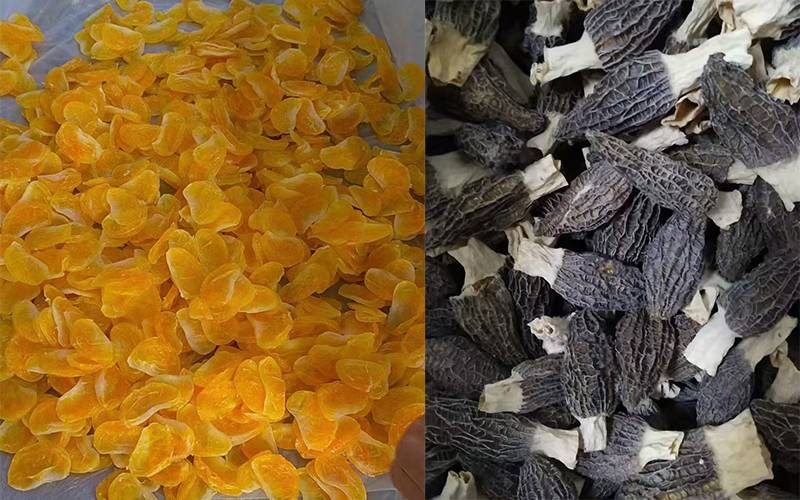
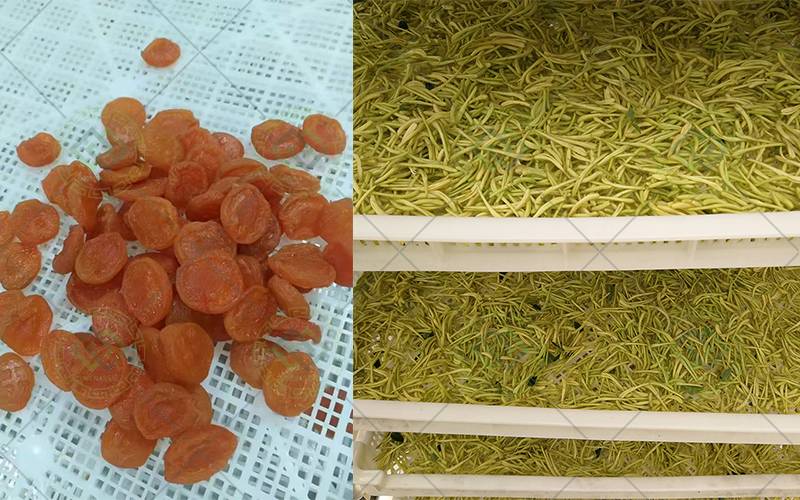
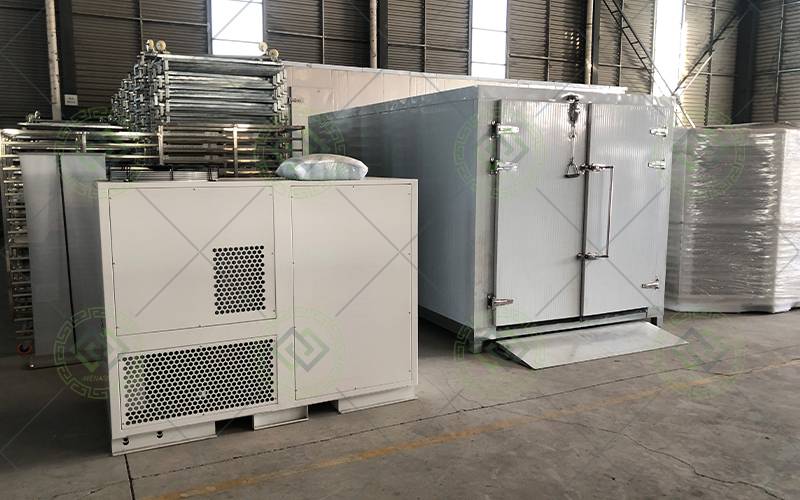
Section 2: Schematic diagram of the working principle of heat pump drying device.
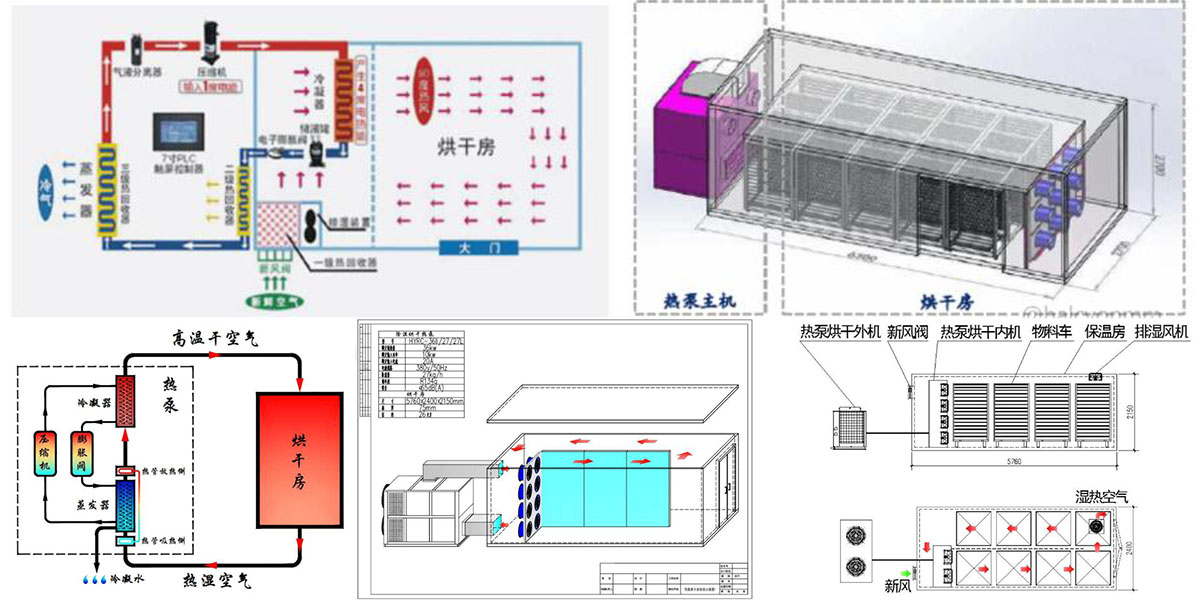
Due to the wide variety of drying materials, the drying requirements are different. (This diagram is for reference only. As the market changes rapidly, the design of the drying room will also change.)
In the actual design of heat pump box drying room, the airflow organization of the drying room adopts different airflow organization forms for drying different materials. At present, there are standard models of drying rooms for drying agricultural products and Chinese herbal medicines.
For example, our MNS-8P| MNS-15P are standard models.
Section 3: Project Description (taking drying mushrooms as an example)
1. Drying material: mushrooms. Assume that 800 kg of fresh mushrooms with a moisture content of 85% need to be dried.
2. Design requirements: Use air pump heat pump to provide heat, and the drying box has intelligent temperature control system. The heat pump has no obvious heat loss, sufficient heat, and uses high-temperature air to dissipate heat evenly. It also has dehumidification and moisture removal functions to ensure high-quality baking of materials.
3. Drying engineering design:
Drying room volume, air duct design, circulating fan, dehumidification port, current and voltage
4. Climate conditions at the project site.
The equipment is in normal use, the lowest temperature in winter is -3℃
5. Thermal calculation
The heat consumption of water in shiitake mushrooms: 1Kcal/kg
Dehydration amount: 800x72%=576 kg 1 kWh=860 Kcal Q=mc(T1-t2)
Q(calorie consumption)Kcal
M(mass)KG
C (specific heat value) C = 1 (kcal/kg.℃)
T1 (temperature after drying)
T2 (temperature before drying)
Q=1x576x(80-(-3))/860=55.6 KW
The heat required to heat the drying room at -3℃
Specific heat of air: 0.24Kcal/kg
Air density: 1.293Kg/m3
The drying room volume is 11.2m3 as an example
Q=0.24x1.293x11.2x(80-(-3))/860=0.34 Kw
It is recommended to use a 10P drying room.
Notice: The above cases are for reference only. Different drying materials have different moisture contents, and the final output of fresh and dry products is also different, so the specific details need to be confirmed with the technicians.
Section 4: Application of Dehydration Machine
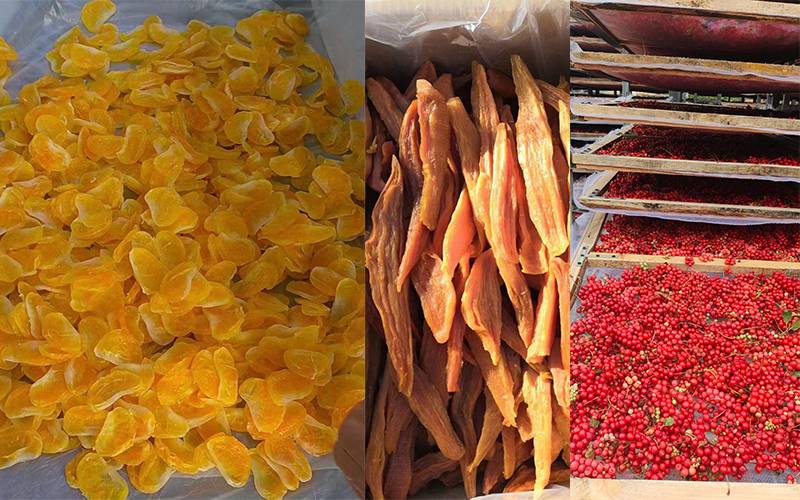
There are many application scenarios for large drying rooms, especially for various spices, herbs, agricultural and sideline products, etc. For example, Africa is rich in various spices, such as black pepper, cinnamon rolls, bay leaves, chili peppers, etc. Using large drying rooms not only has a large output, but also has high quality after drying. Egypt is rich in various fruits and vegetables, etc. Fruits can be sliced into dried fruits, and dried vegetables can also be used in various instant products. Various agricultural and sideline products, such as jujube, mushrooms, honeysuckle, roses, etc. can be made into scented tea.
Section 5: Features of Heat Pump Condenser of Dryer
1. The heat pump drying device has high energy utilization rate and low operating cost.
2. Heat pump drying is generally low-temperature drying, so it will not produce oxidation and chemical decomposition, and is particularly suitable for heat-sensitive. Drying of materials, biological products and food, etc., with high product quality, good color, aroma, taste and appearance.
3. The heat pump drying device with closed-loop circulation of drying medium is not affected by the external climate and maintains the same temperature all year round. It runs smoothly under the same conditions without any environmental pollution.
4. Heat pump drying generally operates at low temperatures, and the equipment has a long service life.
5. As far as the current heat pump drying technology level is concerned, most of them are low-temperature drying. Therefore, compared with high-temperature drying, drying
The time is longer; in addition, the equipment investment of the heat pump drying device is relatively high.