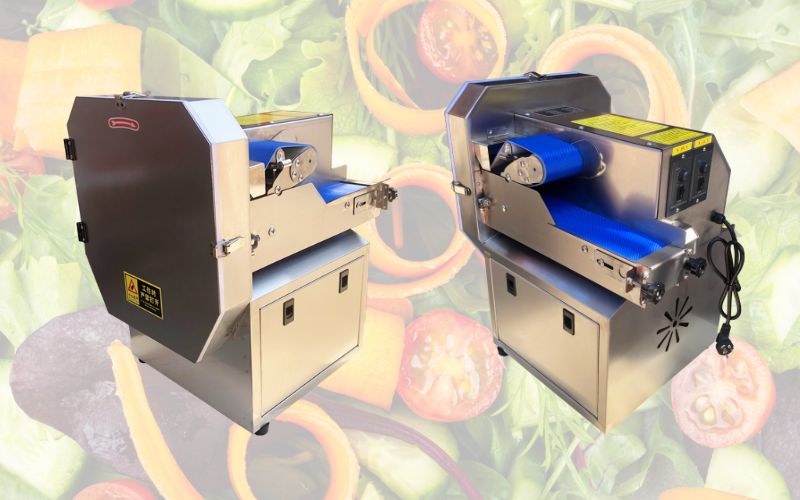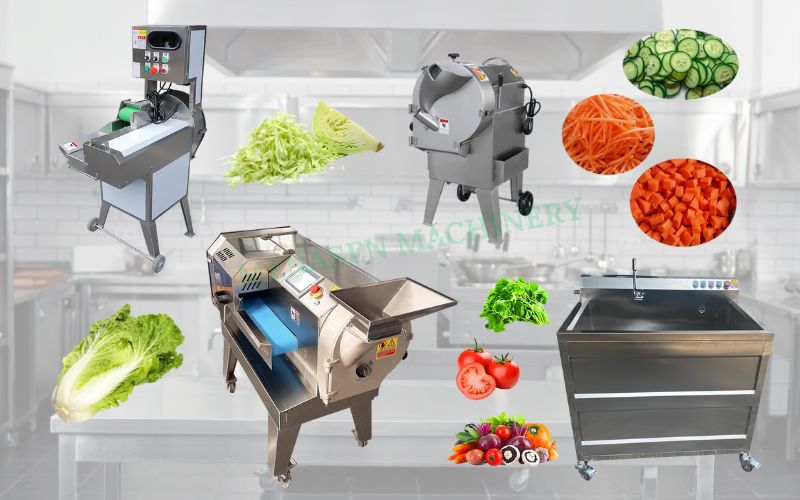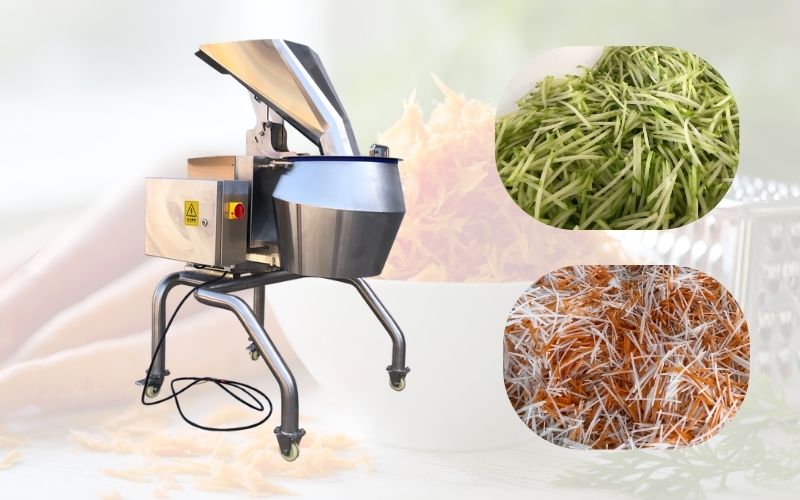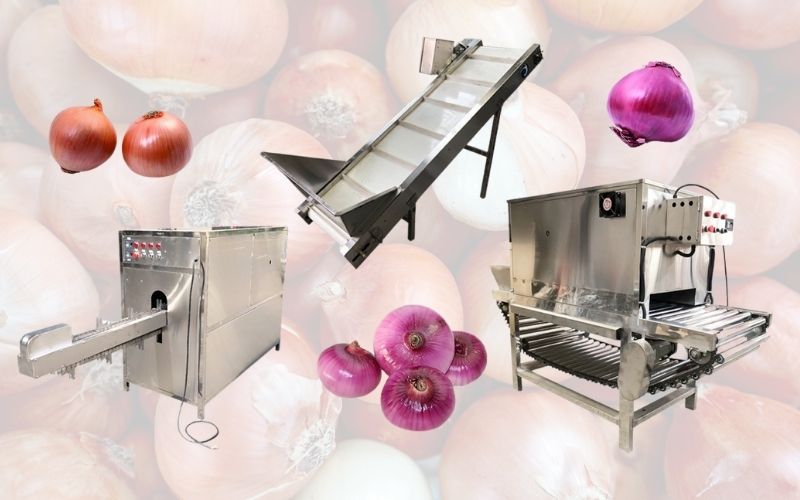
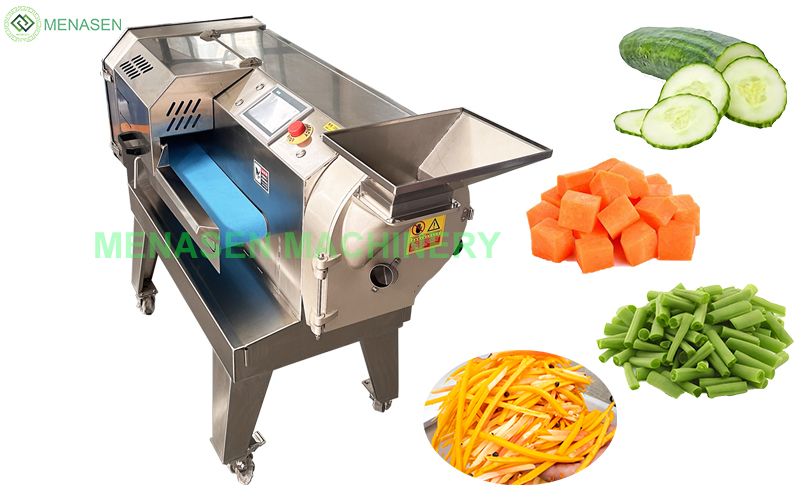
Cutting cutter is a kind of kitchen appliance specially used for processing vegetables. Its core function is to cut vegetables. This machine can quickly and accurately cut all kinds of vegetables, such as Onions, potatoes, carrots, etc., greatly saving the time and energy of cutting vegetables by hand.
Cutting cutters usually offer a variety of ways to meet the needs of different dishes.
Slice: Cut vegetables into evenly thin slices, suitable for making stews, stir-fry, etc.
Shred: Cut vegetables into slender strips, often used in salad, pickled vegetables, etc.
Dicing: Cut vegetables into small cubes, suitable for making fried rice, stew, and soup, etc.
Cut strips: Cut vegetables into long strips, suitable for making salad, barbecue side dishes, etc.
Users can choose different ways of cutting vegetables according to their needs, making the cutting machine more flexible and diverse.
Efficiency: the cutting machine can complete the cutting work of a large number of vegetables in a short time through the high-speed rotating blade or cutting device, which greatly improves the efficiency of cutting vegetables. Compared to manual cutting, the cutting machine can significantly reduce the processing time and make the kitchen work more efficient.
Precision: The cutting machine uses a precise cutting device and control system to ensure the accuracy and consistency of cutting. Whether it is sliced, shredded or diced, the cutter can ensure that the size of the vegetables is uniform, making the dishes more beautiful and delicious.
Prepare the ingredients and the machine
- -Clean the vegetables to be cut to ensure that the surface of the ingredients is free of sediment and debris.
- -Check the cutting machine to ensure that the blade is sharp and free from damage, and that the machine's appearance is complete without obvious faults.
Turn on the machine power
Plug in the power plug to ensure a stable power supply.
Turn on the power switch of the vegetable cutter, and then the machine should enter the standby state.
Set cutting mode
According to the type of food ingredients and the dishes needed, choose the appropriate cutting mode, such as slicing, cutting, ding, etc.
Adjust the cutting thickness or size to meet the food requirements.
Put in the ingredients
Place the cleaned ingredients on the inlet of the machine and be careful not to accumulate much.
Fixed the ingredients with hands or fixtures to ensure that the ingredients were stable and motionless during cutting.
Start cutting
After confirming that the ingredients are properly placed, press the start button and the machine starts to work.
During the cutting process, pay attention to monitoring the machine's sound to ensure smooth operation without abnormality.
Monitor the cutting process
When cutting, always observe the cutting effect, to ensure the cutting quality.
If the cutting is uneven or the blade is stuck, stop immediately for inspection.
cut finished to take vegetables
When the ingredients are cut, the machine automatically stops working.
Open the discharge port, remove the cut vegetables, and pay attention to avoid hand injury.
Clean up the machine and the site
Clean the remaining vegetables inside the machine and keep the machine clean.
Clean the machine housing to remove oil and dust.
Clean up the work site to ensure a clean environment.
Turn off the machine power supply
After cleaning up, turn off the power switch of the vegetable-cutting machine.
Unplug the power plug to ensure that the machine is completely powered off.
1. Power off and remove the components
Before cleaning and maintenance, first, make sure that the cutter has been completely cut off. Pull off the power plug for safety. Then, according to the design of the cutting machine, remove the removable parts, such as cutting tools, hopper, etc.
2. Clean the fuselage and the knives
Use a soft cloth or sponge to wipe the body shell to remove oil and dust from the surface.
When cleaning cutting tools, use a soft cloth or brush to remove food residues and residues from the tool. Be careful to avoid using too sharp tools to avoid damage to the tool.
3. Check the tool's sharpness
Check the sharpness of the cutting tool. If the tool is blunt or damaged, the new tool should be replaced in time. Use the appropriate tool and follow the instructions.
4. Lubricate the mechanical components
For the mechanical parts that need lubrication, such as bearings, gears, etc., use appropriate lubricating oil for lubrication. Ensure that the lubricating oil is evenly applied to the component surface to reduce friction and wear.
5. Clean the internal residue
Open the inside of the cutter and remove residual food debris and scraps. Use a soft brush or vacuum cleaner to make that the interior is clean and odor.
6. Dry it up and reinstall it up
After cleaning and maintenance, make all parts of the cutter dry. Use a soft cloth to gently wipe the cadres, and ensure that there are no water droplets and residues. Subsequently, reinstall the removed parts and install them correctly according to the instructions or marks.
7, regular deep maintenance
In addition to daily cleaning, deep maintenance should also be carried out regularly. This includes thoroughly cleaning the inside of the machine, checking for wires and plugs, fastening loose screws, etc. According to the frequency and environment of use of the cutting machine, determine the appropriate depth maintenance cycle.
1. Place stable and stable to prevent dumping
The cutter shall be placed on flat, firm ground to ensure that the machine does not dump due to uneven ground or vibration.
Avoid placing the machine on the edges or easily sliding surfaces to prevent accidental overturning or sliding.
2. Check and clean up against foreign bodies
Before use, check the inside and outside of the machine for foreign objects, such as tools, screws, etc., to ensure that there are no obstacles inside the machine.
Clean the machine regularly to prevent the accumulation of food scraps and debris to reduce the risk of fire and electrical failure.
3. Select the mode to prevent the miscut
According to the type of food ingredients and the desired cutting effect, choose the appropriate cutting mode.
When switching the mode or adjusting the cutting parameters, ensure that the machine has been completely stopped to prevent accidental damage from misoperation.
4. Install the cutting tool to prevent loosening
When installing the tool, ensure that the tool is firmly fixed and will not become loose or fall off.
Check the tightening of the tools regularly. If there is loosening, it should be tightened or replaced in time.
5. No touch in operation
Do not touch the cutting tool and other moving parts inside the machine while the cutter is running.
Do not extend your hand or any object into the machine to avoid damage by the cutting tool.
6. Start prohibited during maintenance
During machine repair or inspection, ensure the power is disconnected and the machine stops running completely.
Do not start the machine during maintenance to avoid accidents.
7, cleaning and maintenance against damage
During cleaning and maintenance, use appropriate cleaners and tools to avoid using too violent or inappropriate methods.
Avoid damaging the parts or coatings of the machine during the cleaning process to avoid affecting the normal service and life of the machine.
8., the abnormal sound, that is, the shutdown
During use, if the machine hears an abnormal sound or vibration, stop the machine and check it immediately.
If the machine is found to have a fault or problem, contact professional maintenance personnel for maintenance and maintenance in time. Do not disassemble or repair without authorization.